Locations
Theaters, squares and urban spaces that become meeting places

Council Chamber - Chamber of Commerce of Cremona - Mantua - Pavia
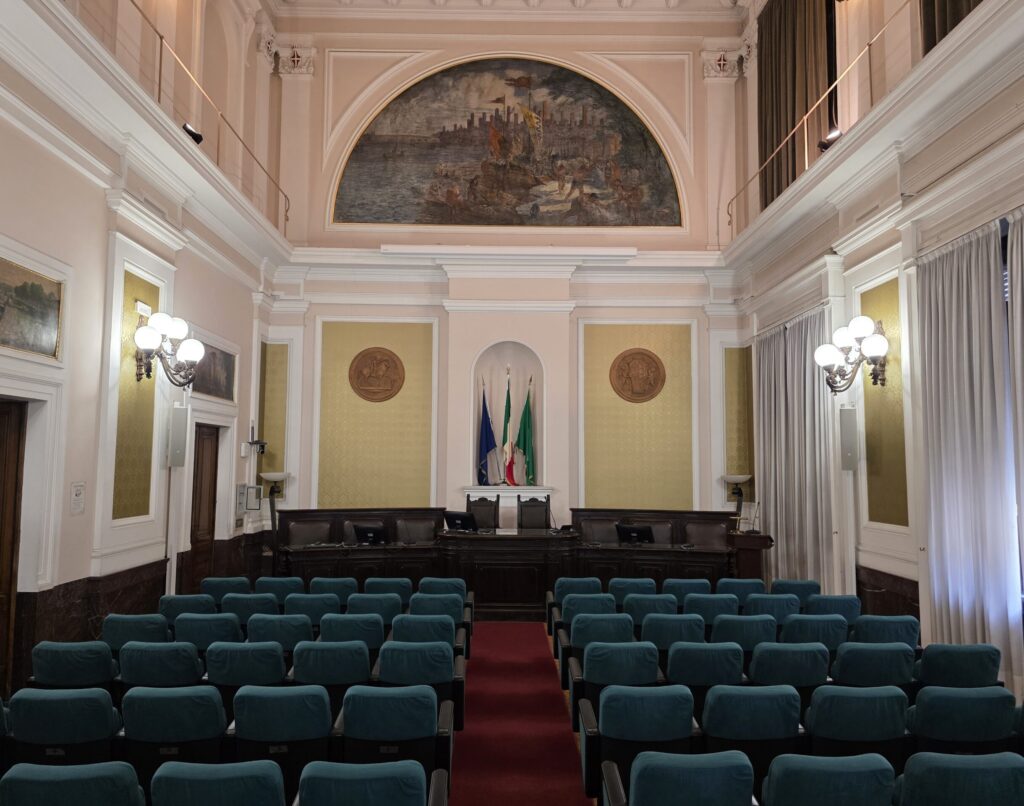
The Pavia Chamber of Commerce’s Council Chamber is an institutional space dedicated to meetings, assemblies and official events. It provides a formal and welcoming environment, ideal for meetings with businesses, stakeholders, and representatives of the local area.
The set-up includes wooden furniture, an orderly seating arrangement, and a dedicated chair area designed to ensure a clear and structured discussion. Large windows ensure good natural lighting, while interior lighting maintains a professional atmosphere even during evening events.
A number of institutional decorative elements complete the space, recalling the history and role of the chamber, helping to create an authoritative and representative context.
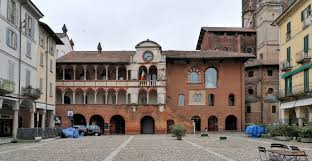
Piazza Collegio Cairoli
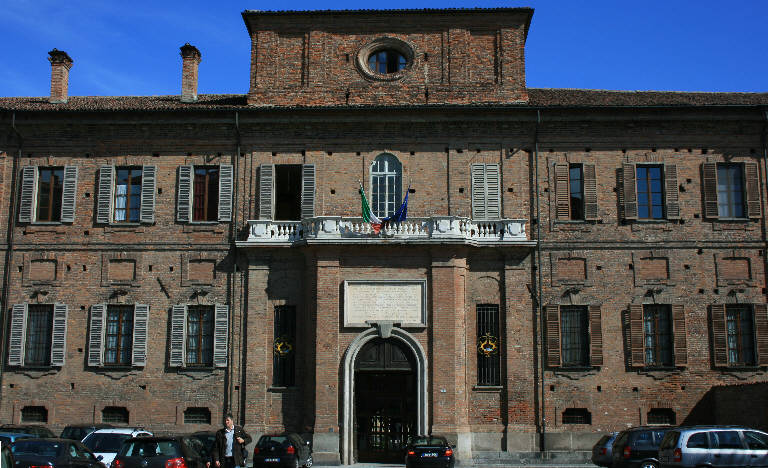
Il convento era un fabbricato di struttura quadrangolare con tre chiostri, sopra i quali vi erano 22 camere e in basso tutta una serie di servizi e appartamenti per i frati. Nei tre chiostri vi era un giardinetto e due corti, che servivano la verdura al convento, e una stalla vicina alla porta rustica. Il cortile della corte grande ha mantenuto la sua ampiezza, con colonnati e portici. Era dotato all’esterno di una grande chiesa aperta al pubblico, ancora esistente.
Exhibition Center
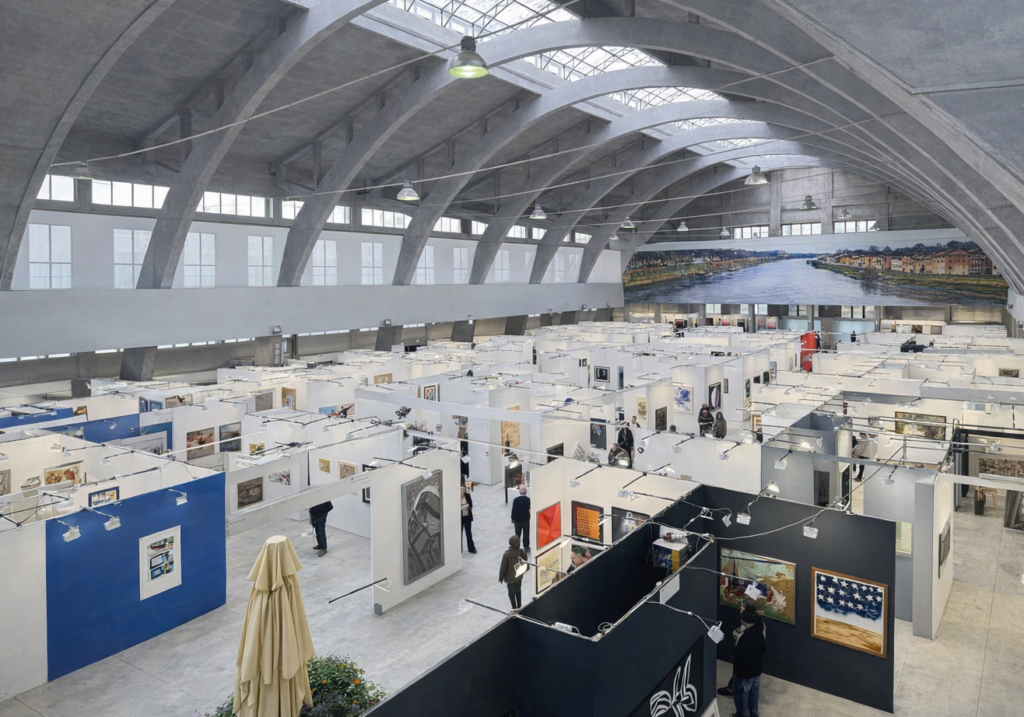
The Pavia Exhibition Center, designed in 1957 by architects Carlo Alberto Sacchi and Duilio Chiandussi and inaugurated in 1958, is one of the city’s main exhibition and cultural venues. Located in Piazzale Europa, the building stands out for its modern reinforced concrete architecture and is divided into two connected sections, with a large exhibition area spread across multiple levels. Today, it hosts exhibitions, fairs, and events, representing a focal point for Pavia’s cultural and exhibition life.
Scarpa Hall - Università degli Studi di Pavia
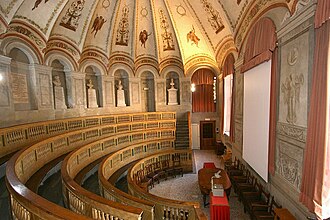
The Scarpa Hall is a historic hall at the University of Pavia, designed in 1785 by the Viennese architect Leopoldo Pollack (1751 – 1806). The University had had an anatomical theatre since the 16th century, however, with the arrival of the great surgeon and anatomist Antonio Scarpa (Lorenzaga, 19 May 1752 – Pavia, 31 October 1832) in 1783, who intended to transform the Pavia anatomical school into one of the best in Europe, the creation of a new theatre, more suited to the new research and teaching approaches, became necessary. The Scarpa Hall is a historic hall at the University of Pavia, designed in 1785 by the Viennese architect Leopoldo Pollack (1751 – 1806). The University had had an anatomical theatre since the 16th century, however, with the arrival of the great surgeon and anatomist Antonio Scarpa (Lorenzaga, 19 May 1752 – Pavia, 31 October 1832) in 1783, who intended to transform the Pavia anatomical school into one of the best in Europe, it became necessary to create a new theatre, more suited to the new research and teaching approaches.
Chiesa Santa Maria Gualtieri
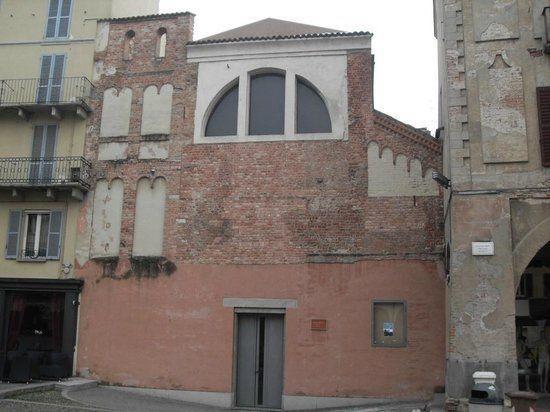
Verso la fine del sec. X, il giudice e messo imperiale Gualtieri (+ 989) eresse accanto alla sua abitazione privata una chiesa dedicata a S. Maria, dotandola di copiosi possedimenti, fra cui la chiesa e l’ospedale di S. Giacomo della Cerreta.
Risulta che la chiesa fu anche consacrata da Papa Urbano II, nel 1096, durante una sosta a Pavia. L’edificio attuale risale agli inizi del sec. XIII, e presenta caratteri più evoluti rispetto alla precedente serie delle chiese romaniche pavesi.
Il vivace gioco delle archeggiature e delle lesene, il sensibile slancio della costruzione, ed altri particolari che appena si intravvedono, dimostrano che la costruzione prelude già al gotico.
La chiesa era officiata da una collegiata di canonici viventi in comune, e fu soppressa nel 1789.
Passata in proprietà di privati, subì gravi deturpazioni, e fu adibita parte ad abitazione e parte a magazzino.
Le tracce della facciata permettono di concludere che essa era scompartita in tre campi da contrafforti aggettanti, ed era coronata dal solito motivo di archetti pensili.
L’interno, gravemente alterato dagli adattamenti ottocenteschi, conserva traccia delle volte e dei piloni che dividevano la chiesa in tre navate. L’abside centrale, nel sec. XV, è stata distrutta e sostituita da un coro rettangolare.
Nel 1991, la struttura viene completamente restaurata. Il ripristino dell’edificio a tre navate di quattro campate e il mantenimento degli affreschi nell’abside meridionale ( la più antica testimonianza di resti pittorici romanici di Pavia) fanno dell’ex-chiesa un importante centro per le attività culturali.
Cortile delle Statue - Università Centrale
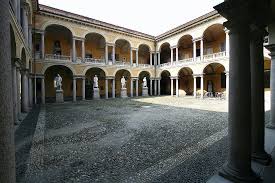
Il cortile prende il nome dalle quattro statue collocate lungo il lato sud e dedicate rispettivamente a Luigi Porta, Antonio Bordoni, Bartolomeo Panizza e Camillo Golgi.
Largo Angelo Grilli, Piazza Castello
Palazzo Broletto
Nel Duecento il Broletto di Pavia era il più grande palazzo della città, celebrazione pubblica del potere del comune. Il primo palazzo comunale sorse sul lato settentrionale di Piazza Cavagneria, e nel 1236 fu ampliato sul lato antistante Piazza della Vittoria.
Nella corte interna, dove in età comunale venivano giudicate le cause, si possono ancora vedere i portici del palazzo più antico, a cui si è in parte sovrapposto il palazzo cinquecentesco della corporazione dei Notai, e quelli dell’ampliamento del 1236.
Il Broletto di Pavia è oggi sede della Scuola Universitaria Superiore IUSS Pavia, un istituto di formazione avanzata e di ricerca scientifica.
Taramelli – Foscolo High School
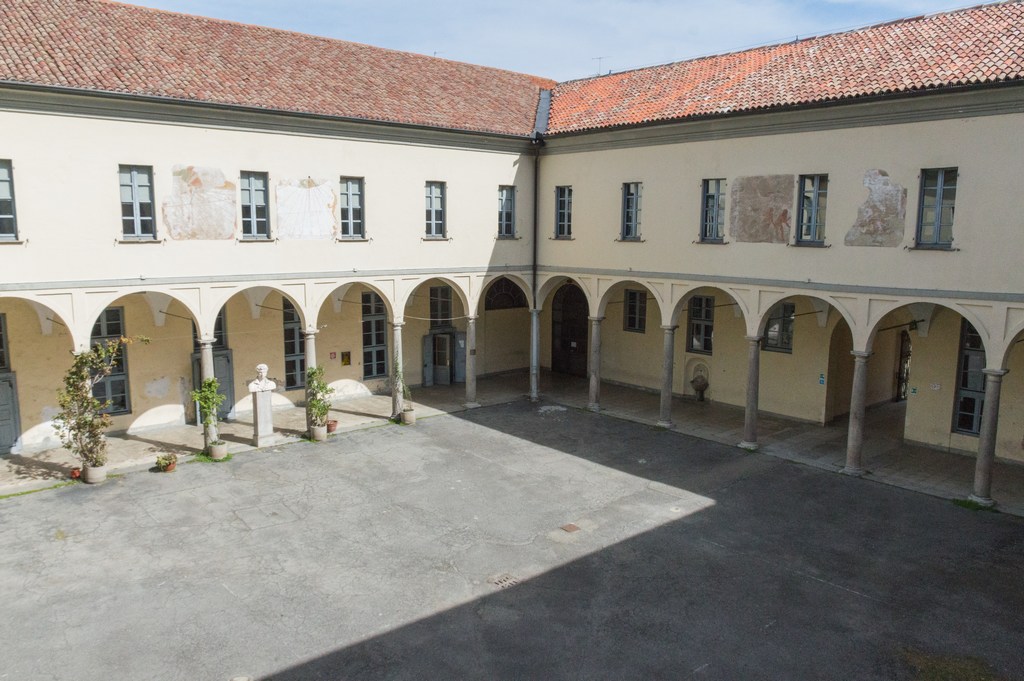
The Taramelli – Foscolo High School in Pavia was founded in 2015/2016 from the merger of the Torquato Taramelli Scientific High School and the Ugo Foscolo Classical High School, both housed in historic buildings of great architectural and cultural value.
The Scientific High School is housed in a former 15th-century Carmelite convent, with a twenty-two-column portico and a majestic cedar of Lebanon in the center of the courtyard. Over time, the building has housed theological and philosophical schools, as well as the Scuola Normali.
The Classical High School is located in the ancient convent of Santa Maria di Canepanova, built next to the church of the same name, built in 1492. It became a Royal High School in 1859 and has been named after Ugo Foscolo since 1865/66.
Today, the institute represents a point of reference for humanistic and scientific education in the city, with deep roots in Pavia’s educational history.
Auditorium Vittorio Necchi - Assolombarda Pavia office
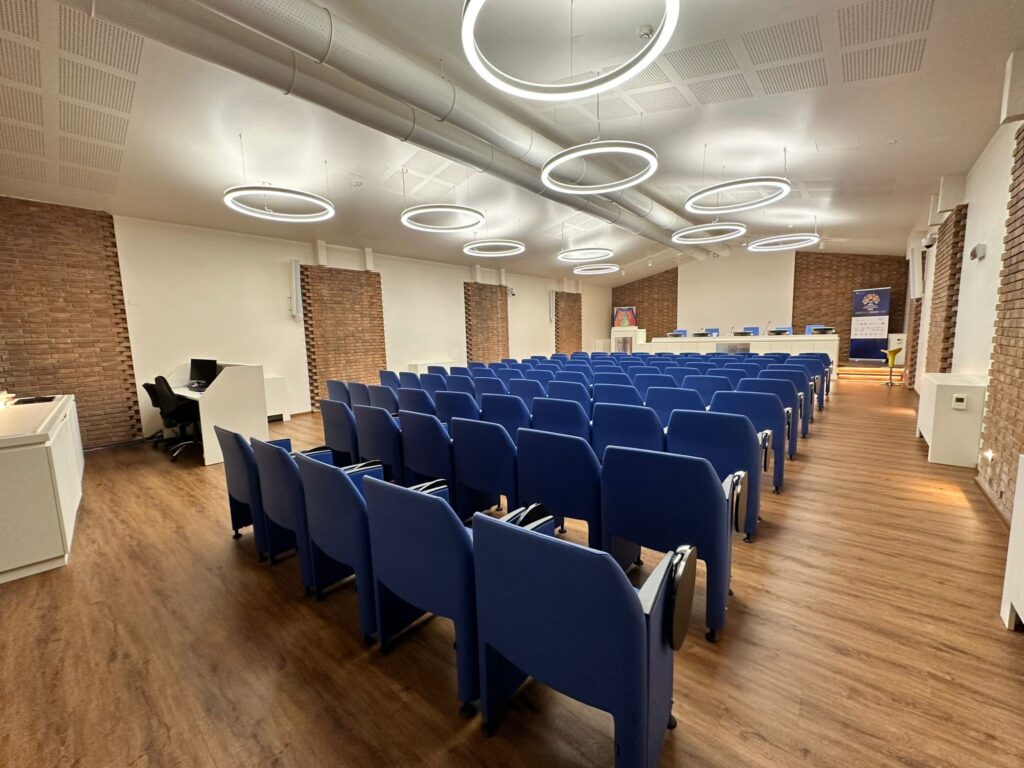
The Vittorio Necchi Auditorium is the conference space of Assolombarda’s Pavia headquarters, located at Via Bernardino da Feltre 6. The room, designed to host meetings and discussions, is characterized by an orderly and functional environment, with a layout that encourages audience participation and clarity of presentations.
Foscolo Hall - Università degli Studi di Pavia
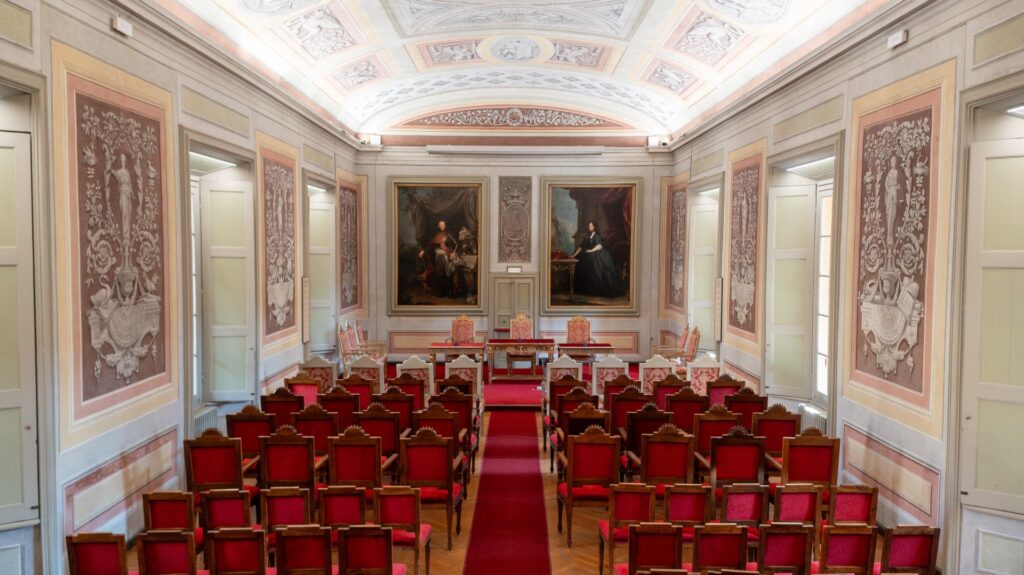
The Foscolo Hall is one of the University of Pavia’s historic classrooms, designed in 1775 by architect Giuseppe Piermarini as part of the university reform commissioned by Empress Maria Theresa of Austria.
The hall is entirely frescoed by Paolo Mescoli: the walls feature carious figures symbolizing the various subjects taught at the university, while the ceiling features a large oval depicting Minerva and Mercury. The decoration is completed by two large oil portraits of Maria Theresa and Joseph II, painted by Hubert Maurer in 1779 and sent from Vienna as an integral part of the decorative apparatus.
In this hall, Ugo Foscolo, professor of Eloquence, delivered his famous inaugural oration, “On the Origin and Office of Literature,” in January 1809; for this reason, the room was later dedicated to him, taking the name Aula Foscolo.
Sala B - Broletto Palace
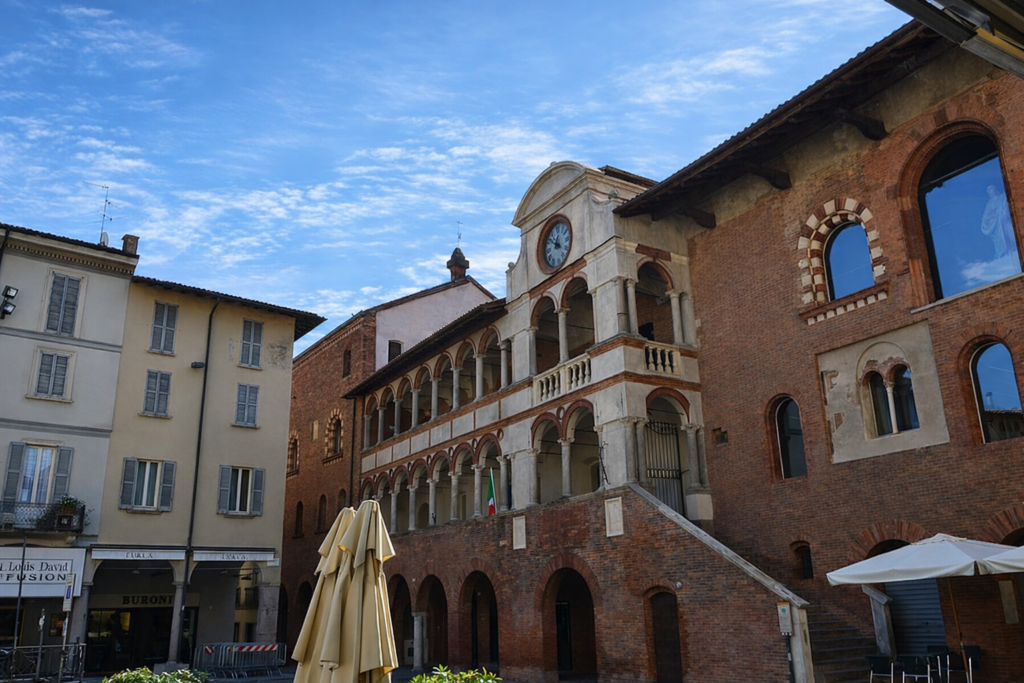
Sala B is located in the internal courtyard of Pavia’s Broletto, the city’s oldest public building, located in the heart of the historic center and overlooking Piazza della Vittoria. Built between the 11th and 12th centuries as the seat of municipal government, the complex hosted city assemblies and the main administrative functions for centuries. The structure, typical of medieval civic buildings, features porticoes on the ground floor and large upper rooms intended for council meetings. Over time, the building has been expanded and remodeled, including the southern wing overlooking Piazza Cavagneria. Today, after extensive restoration and enhancement, the Broletto continues to be a hub for Pavia’s cultural life, hosting exhibitions, events, and city institutions within its historic internal courtyard.
Sala del Camino - IUSS
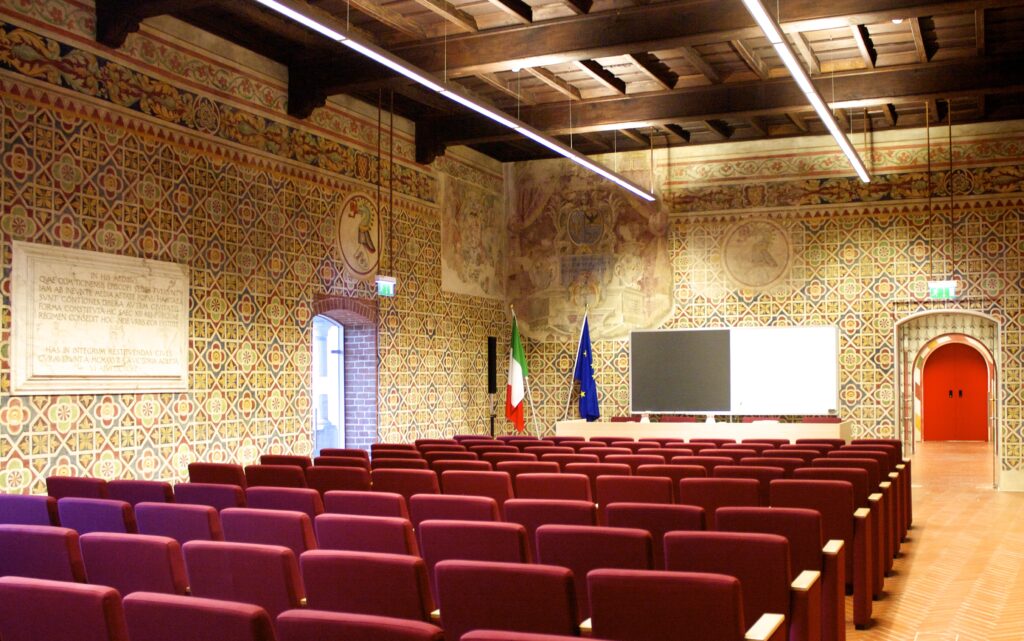
The Sala del Camino, located in the heart of the restored Palazzo del Broletto, is one of the most evocative spaces of the IUSS Pavia. The building, dating back to the 12th century, still retains the medieval architectural legacy that has made it one of the city’s most recognizable civic symbols.
The room takes its name from its imposing historic fireplace, an element that dominates the space and defines its character.
Inside, frescoes recovered during restoration reveal decorative layers from different eras: geometric motifs, fragments of painted frames, and traces of original colors that testify to the building’s long history and its central role in city life.
The room also houses a particularly valuable statue, placed in a scenic position. The work, with its sober and monumental presence, harmoniously dialogues with the surrounding architecture, helping to strengthen the historical and cultural character of the space.
A place that unites memory, art, and architecture, restoring the profound identity of the Broletto and the city of Pavia.
Sala Affreschi - Collegio Borromeo
Il Collegio, fondato da San Carlo nel 1561, è uno dei più bei palazzi manieristi della Lombardia; eretto tra il 1561 e il 1588 su progetto di Pellegrino Pellegrini, detto il Tibaldi, subì interventi successivi del Richini, che arricchì la struttura con bei giardini all’italiana. Definito dal Vasari ‘palazzo per la Sapienza’, il collegio si affaccia su una delle piazze più suggestive della città con una fronte dal forte risalto plastico, reso dalle cornici delle finestre alternate a nicchie e dal portale monumentale. Agli inizi del ‘600 il salone al piano superiore fu decorato con il ciclo pittorico dedicato a San Carlo Borromeo: volta e parete settentrionale ad opera dell’orvietano Cesare Nebbia e aiuti e sulla parete meridionale l’episodio dell’imposizione del cappello cardinalizio, opera di Federico Zuccari. Negli anni 1818-20 l’ampliamento e il completamento del prospetto verso il fiume provocò l’abbattimento della limitrofa chiesa medievale di San Giovanni in Borgo, il cui ricco corredo scultoreo è ora presso i Musei Civici. Fondato per permettere a giovani dotati di talenti intellettuali ma sprovvisti di beni, quindi impossibilitati ad accedere all’Università, di dedicarsi agli studi e per garantire, al tempo stesso, in età controriformistica, un’adeguata formazione morale, il collegio, nei secoli XVII e XVIII fornì soprattutto giuristi destinati a cariche nel governo e nell’amministrazione della Chiesa e dello Stato milanese.
Piazza della Vittoria
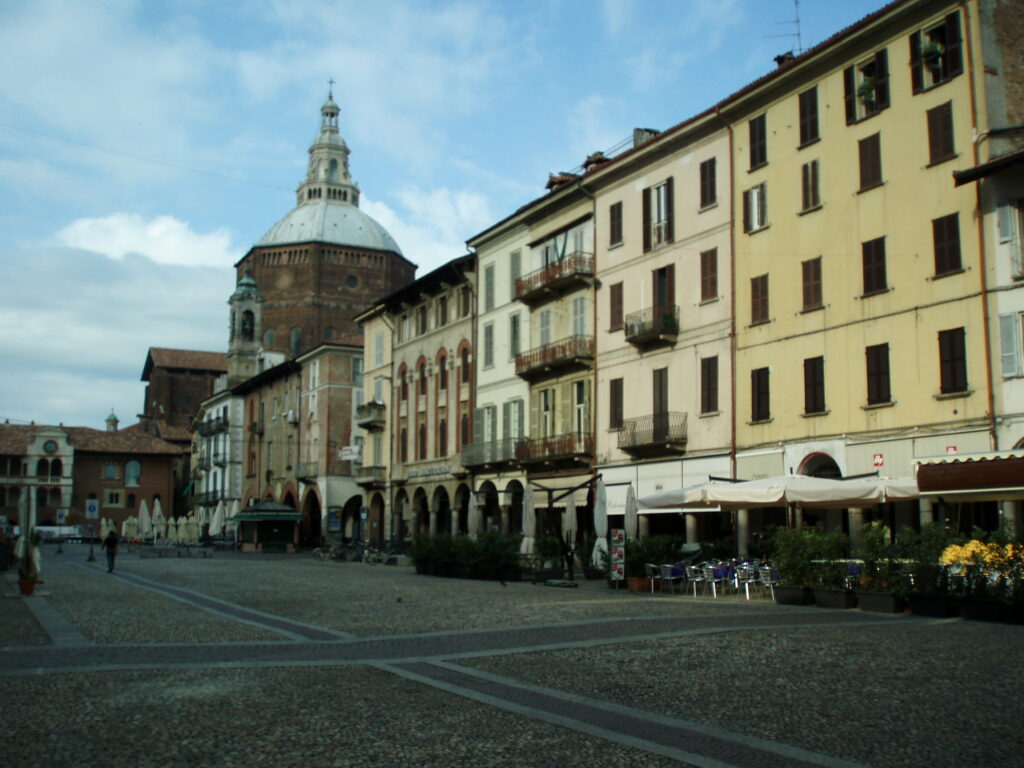
Piazza della Vittoria si impone come uno dei luoghi più affascinanti e ricchi di storia della città. Questo ampio spazio, circondato da eleganti edifici d’epoca, è il punto d’incontro preferito dai pavesi e dai visitatori, che qui si ritrovano per passeggiare, fare acquisti o semplicemente godersi l’atmosfera vivace e cordiale della piazza.
Piazza della Vittoria è anche un teatro a cielo aperto, dove si svolgono alcuni degli eventi più importanti della vita cittadina. Dai mercatini di Natale alle fiere di antiquariato, dalle manifestazioni sportive ai concerti, la piazza si anima in ogni stagione, offrendo sempre nuove occasioni di svago e di cultura. E quando cala la sera, la piazza si illumina di una luce soffusa e romantica, invitando a passeggiare sotto i portici o a sedersi ai tavolini dei caffè storici, per assaporare un aperitivo o un gelato in compagnia. Piazza della Vittoria è il cuore pulsante di Pavia, un luogo dove la storia si intreccia con la vita quotidiana, regalando emozioni uniche a chi ha la fortuna di viverla.
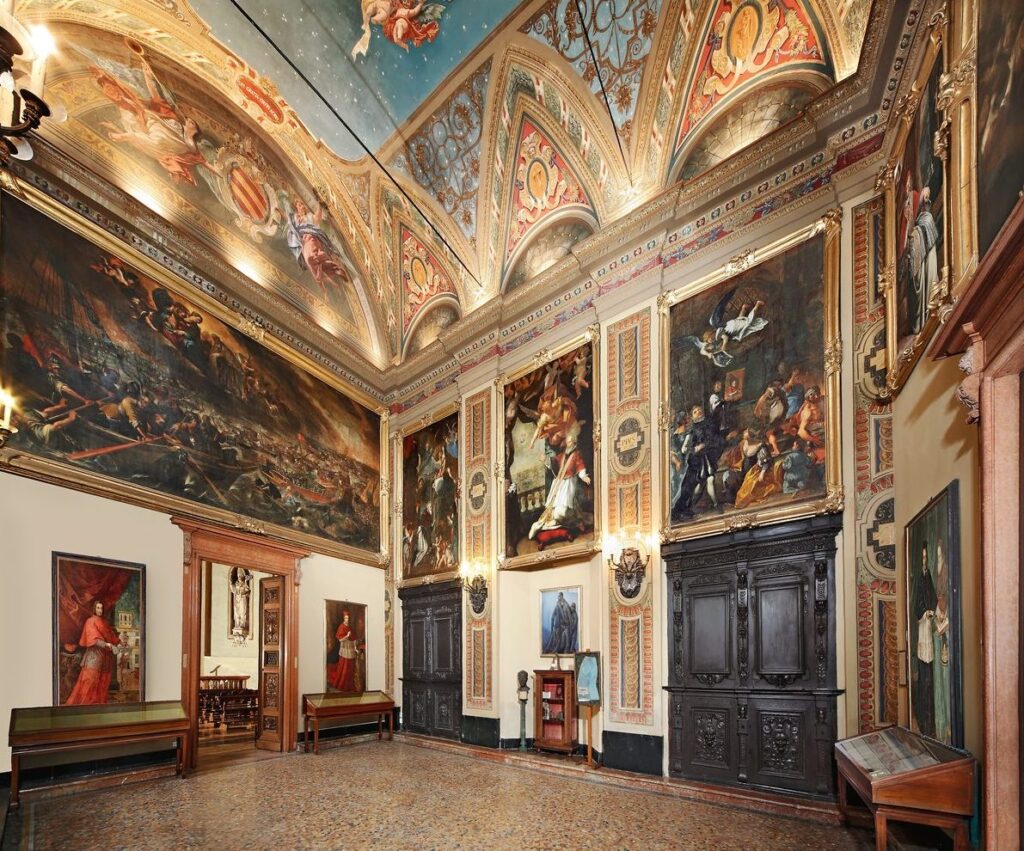
Salone San Pio - Collegio Ghislieri
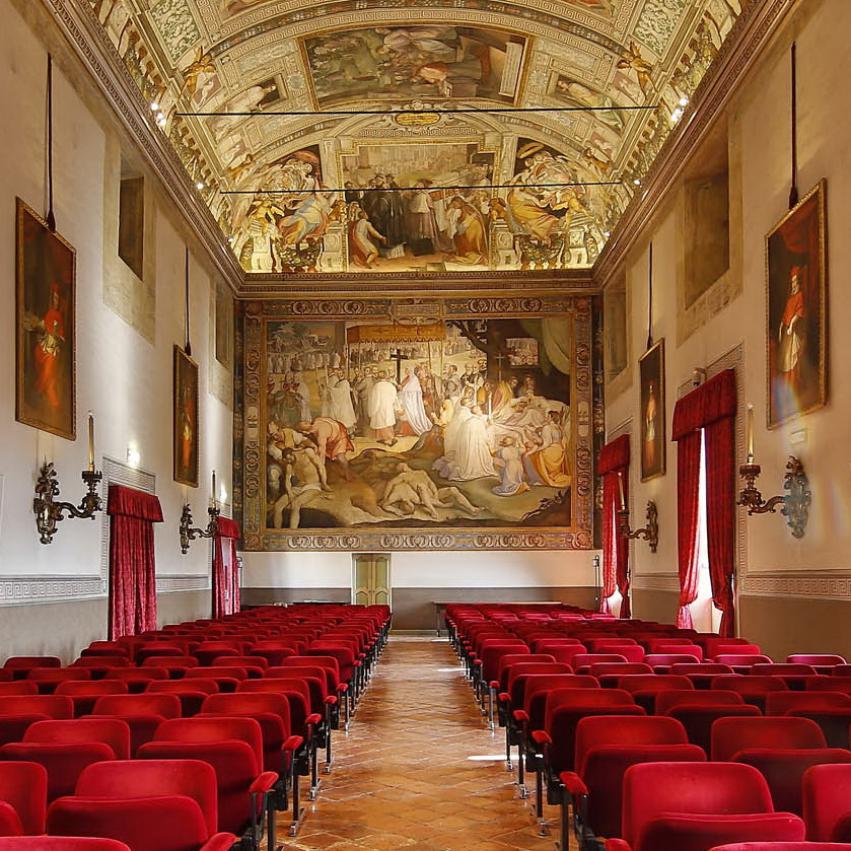
Concepito per ospitare una serie di dipinti che celebrano i miracoli del fondatore del Collegio, il Salone San Pio, oltre ad essere lo spazio di accesso alla Cappella, è utilizzato per mostre, conferenze e concerti. Tra le tele di maggior pregio vanno ricordate: Il crocifisso ritira i piedi (avvelenati) al bacio del papa e Il ritratto del papa fa spegnere un incendio di Luigi Scaramuccia; San Pio libera l’ossessa di Giovanni Peruzzini; La visione di Pio V della battaglia di Lepanto di Giovanni Battista del Sole
Aula Magna - Università degli Studi di Pavia
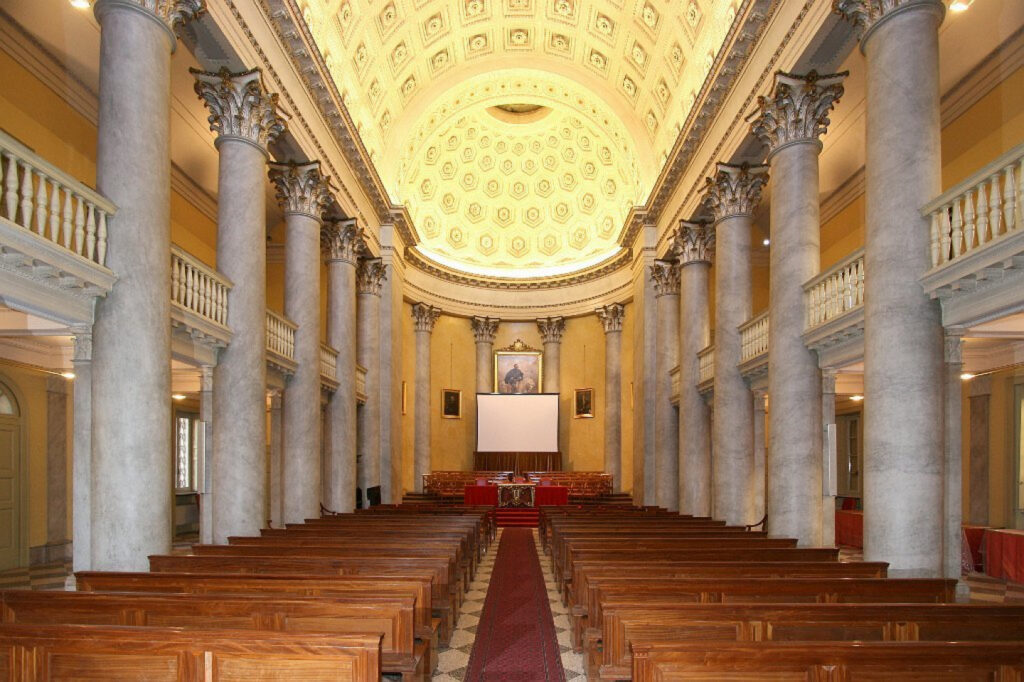
L’Aula Magna, opera dell’architetto Giuseppe Marchesi, è sede delle principali cerimonie dell’Ateneo.
Il progetto per la grande aula, esaminato dalla Commissione d’Ornato nel 1837, prese il via solo nel 1845. L’impresa terminò nel 1850, come si legge anche nell’iscrizione dedicatoria sulla facciata.
Nell’edificio si fondono le due fondamentali tipologie del mondo classico: quella del tempio (pronao con colonne corinzie e timpano completato da sculture) a indicare la sacralità del luogo e quello della basilica a indicarne l’utilizzo civile e pubblico.
Nell’abside campeggia il ritratto di Vittorio Emanuele II a cavallo.
Cinema Politeama
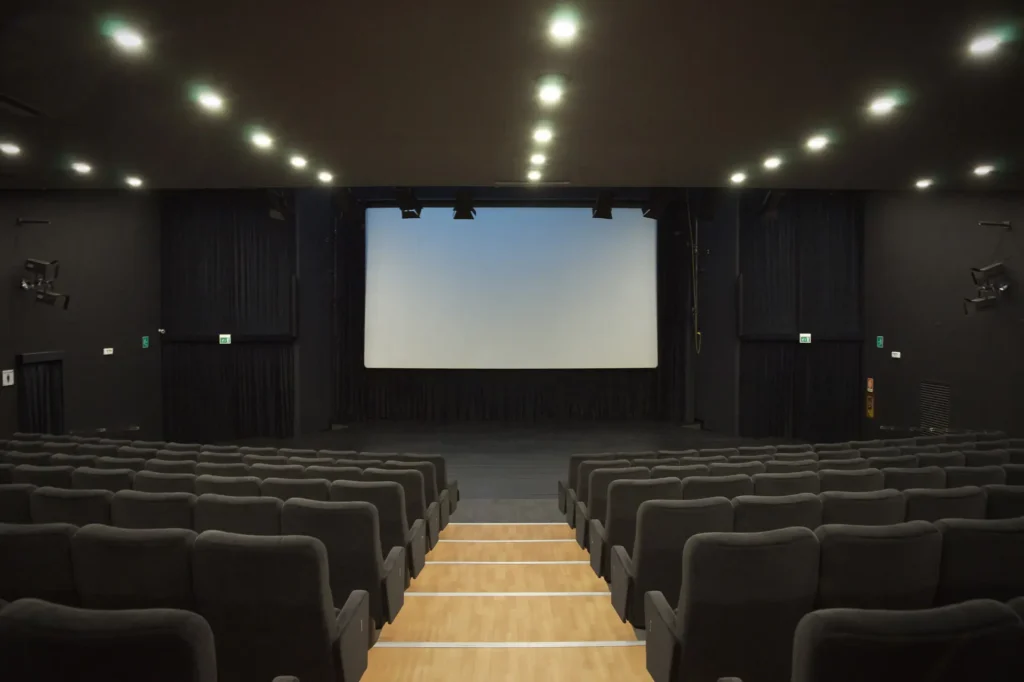
Until the beginning of the last century, it was a tavern. In the 1920s, architect Piero Portaluppi was commissioned to design a cinema-theater.
The architect designed a angular perspective between Corso Cavour and Via Parodi. The theater opened in 1927 as the “Politeama Principe Umberto Cinema Teatro.”
In 1978, the cinema closed. It reopened in 1991 as a shopping center and cinema with approximately 370 seats. The angular perspective was maintained during the renovations, and the Art Deco wrought-iron canopy with the writing “PPUCT” (Politeama Principe Umberto Cinema Teatro) still stands.
Collegio Ghislieri
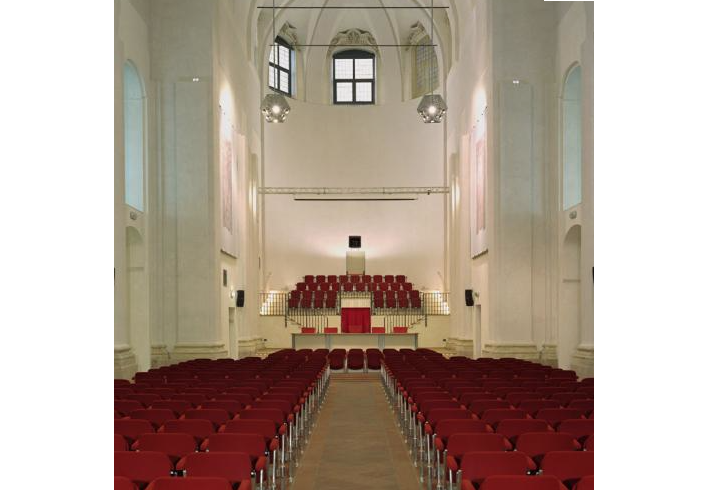
Founded in 1567, it is one of the city’s most prestigious historic university colleges. A hub for education and academic life for centuries, it combines tradition, excellence, and international openness in the heart of Pavia.
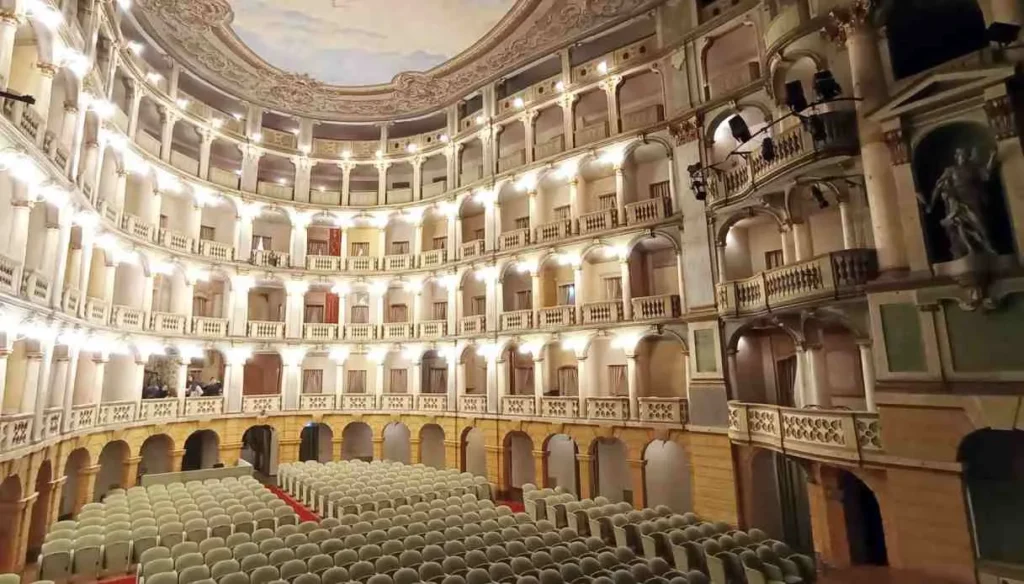
Teatro Fraschini
The city’s historic theater, perfect for performances, theatrical science education, and large evening events.
It combines architectural beauty with a strong emotional impact.
ITIS Cardano
The “G. Cardano” State Industrial Technical Institute in Pavia is a center of excellence for technical and scientific education, with cutting-edge programs and strong integration between school and the world of work. It offers programs in computer science, electronics, mechanics, and chemistry, as well as a high school specialization in applied sciences, with innovative initiatives such as artificial intelligence in the classroom and career guidance and training projects.